

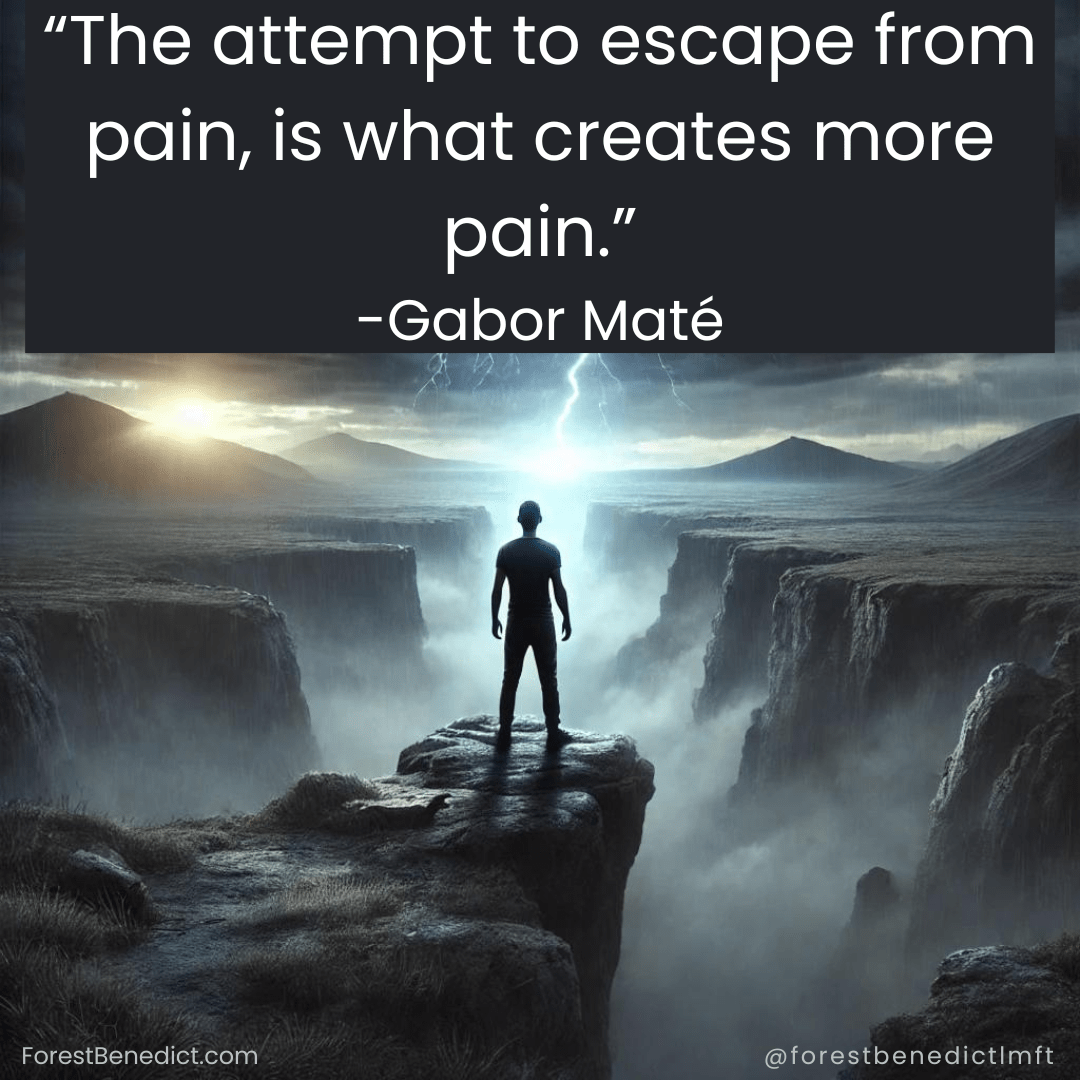
These words by Gabor Maté capture a universal truth about human suffering. Pain is an inevitable part of life, but how we respond to it often determines whether it leads to growth or more suffering. In our quest to avoid pain, we inadvertently create more of it, often in ways that are subtle and insidious. This paradox can feel confusing and even frustrating, but it also holds the key to profound healing and transformation.
The Protective Parts Within Us
Within each of us lies a complex internal system made up of different parts, each with its own role and purpose. These parts aren’t physical, but rather psychological and emotional aspects of our personality that help us navigate the world. Some parts are driven by logic and reason, while others are fueled by emotion and desire. Still, others serve a protective function, stepping in to shield us from harm, particularly from the pain of past traumas and current struggles.
These protective parts often emerge in childhood when we first encounter pain or distress that feels overwhelming. A child who experiences neglect, for example, might develop a part that numbs feelings of loneliness by focusing on achieving perfection in school or other areas. Another child who feels unsafe at home might develop a part that becomes hyper-vigilant, always on the lookout for danger. These parts are adaptive in that they help the child survive emotionally, but as we grow into adulthood, they can become maladaptive.
Rather than helping us heal, these protective parts can keep us stuck in a cycle of avoidance. When pain arises—whether it’s from a failed relationship, a job loss, or the death of a loved one—these parts might try to push it away, numb it out, or distract us with other activities. On the surface, this can seem like an effective strategy, but in reality, it often creates more suffering.
The Cycle of Avoidance and Suffering
When we attempt to avoid pain, we’re essentially telling ourselves that we cannot handle it, that the pain is too much for us to bear. This belief in our own inability to cope can lead to feelings of anxiety, depression, and a sense of powerlessness. The protective parts of us, sensing this distress, may double down on their efforts to shield us from the pain, leading to behaviors like overeating, overworking, substance abuse, or constant distraction through social media or other means.
These behaviors can provide temporary relief, but they do not address the underlying pain. Instead, they can create additional layers of suffering. Overeating, for instance, might lead to feelings of shame or guilt, which then need to be numbed out by further eating. Overworking can lead to burnout, which in turn may cause feelings of failure or inadequacy. The more we avoid the original pain, the more entangled we become in this web of suffering.
Moreover, avoidance prevents us from fully experiencing and processing our emotions. Pain, like any other emotion, is meant to be felt, processed, and released. When we avoid it, we trap it inside us, where it festers and grows. Unprocessed pain can manifest as physical illness, chronic stress, or emotional numbness, cutting us off from the full range of human experience, including joy, love, and connection.
The Path to Healing: Befriending Our Pain
So, how do we break free from this cycle of avoidance and suffering? The answer lies in a counterintuitive approach: rather than running from our pain, we need to turn toward it. This doesn’t mean wallowing in suffering or resigning ourselves to a life of pain. Instead, it means befriending our pain and the parts of us that carry it, with compassion and understanding.
The first step in this process is to acknowledge the pain and the protective parts within us. This can be challenging because it requires us to sit with uncomfortable emotions and memories. However, it’s important to remember that these parts developed for a reason—they were trying to protect us. By recognizing this, we can approach them with compassion rather than judgment.
Self-compassion is a critical component of this process. It involves treating ourselves with the same kindness and understanding that we would offer to a close friend who is struggling. When we practice self-compassion, we create a safe internal environment where our protective parts feel heard and understood. This safety is essential for healing because it allows these parts to relax and step back, giving us the space to fully experience and process our pain.
As we connect with our pain, it’s important to do so with a sense of curiosity and openness. We can ask ourselves questions like, “What is this pain trying to tell me?” or “What can I learn from this experience?” By approaching our pain with curiosity, we can uncover the deeper truths it holds, such as unmet needs, unresolved trauma, or unexpressed emotions. These insights can guide us toward the healing and growth we need.
Integration and Transformation
Once we’ve connected with our pain and understood its message, the next step is integration. This involves bringing the insights we’ve gained into our daily lives and using them to make meaningful changes. For example, if our pain has revealed a deep need for connection, we might make an effort to build stronger relationships with others. If our pain has uncovered unresolved trauma, we might seek therapy or other forms of support to address it.
Integration also means embracing all parts of ourselves, including the ones that carry pain. Rather than viewing these parts as enemies or obstacles, we can see them as allies in our journey toward wholeness. By accepting and integrating these parts, we become more resilient, more compassionate, and more capable of facing life’s challenges.
This process of connection, understanding, and integration can lead to profound transformation. When we stop running from our pain and start listening to it, we unlock our potential for healing and growth. We become more attuned to our own needs and emotions, more connected to others, and more aligned with our true selves.
The Power of Self-Compassion
Self-compassion is the thread that weaves through every stage of this process. It’s the foundation that allows us to connect with our pain, the balm that soothes our protective parts, and the guide that leads us toward integration and transformation. Without self-compassion, it’s easy to get stuck in self-judgment or avoidance. With it, we create a space of safety and love where true healing can occur.
Dr. Kristin Neff, a leading researcher on self-compassion, defines it as having three components: self-kindness, common humanity, and mindfulness. Self-kindness involves being gentle with ourselves in moments of pain rather than harshly judging ourselves. Common humanity reminds us that pain is a shared human experience and that we are not alone in our suffering. Mindfulness allows us to be present with our pain without getting overwhelmed by it.
By cultivating these qualities, we can approach our pain with the compassion and understanding it needs to heal. We can acknowledge that pain is a natural part of life and that it has something to teach us. We can hold our pain gently, knowing that it is not a sign of weakness but a sign of our humanity.
Embracing the Journey
The journey of healing and transformation is not an easy one, but it is a journey worth taking. It requires courage, patience, and a willingness to face our pain head-on. But as we do so, we discover that our pain is not something to be feared or avoided. It is a messenger, a guide, and a teacher that can lead us to a deeper understanding of ourselves and a richer, more meaningful life.
In the words of Gabor Maté, “The attempt to escape from pain is what creates more pain.” By embracing our pain with self-compassion, we break free from the cycle of avoidance and suffering. We open ourselves to the possibility of healing, growth, and transformation. And in doing so, we become more whole, more resilient, and more connected to the true essence of who we are.
Let this be an invitation to turn inward, to listen to the parts of you that are hurting, and to offer them the compassion and care they deserve. Your pain is not your enemy. It is a part of your journey, and with self-compassion as your guide, it can lead you to the healing and transformation you seek.
As a trained Internal Family Systems (IFS) therapist, it would be my honor to support you on your healing journey. I am dedicated to helping you reconnect with the deepest parts of yourself, guiding you through the process of healing your trauma, and teaching you to approach your pain with the compassion it needs. Together, we will work to understand the protective parts of you, transform your relationship with them, and unlock the potential for true healing and transformation that lies within. On your journey to healing and wholeness, I am deeply committed to walking alongside you, providing the care, support, and guidance you need every step of the way.
In compassionate support,
Forest Benedict, LMFT
IFS Therapist
***This post was created with the assistance of AI
Leave a Reply